


By Lily Munnik
A house is a gathering place for memories.
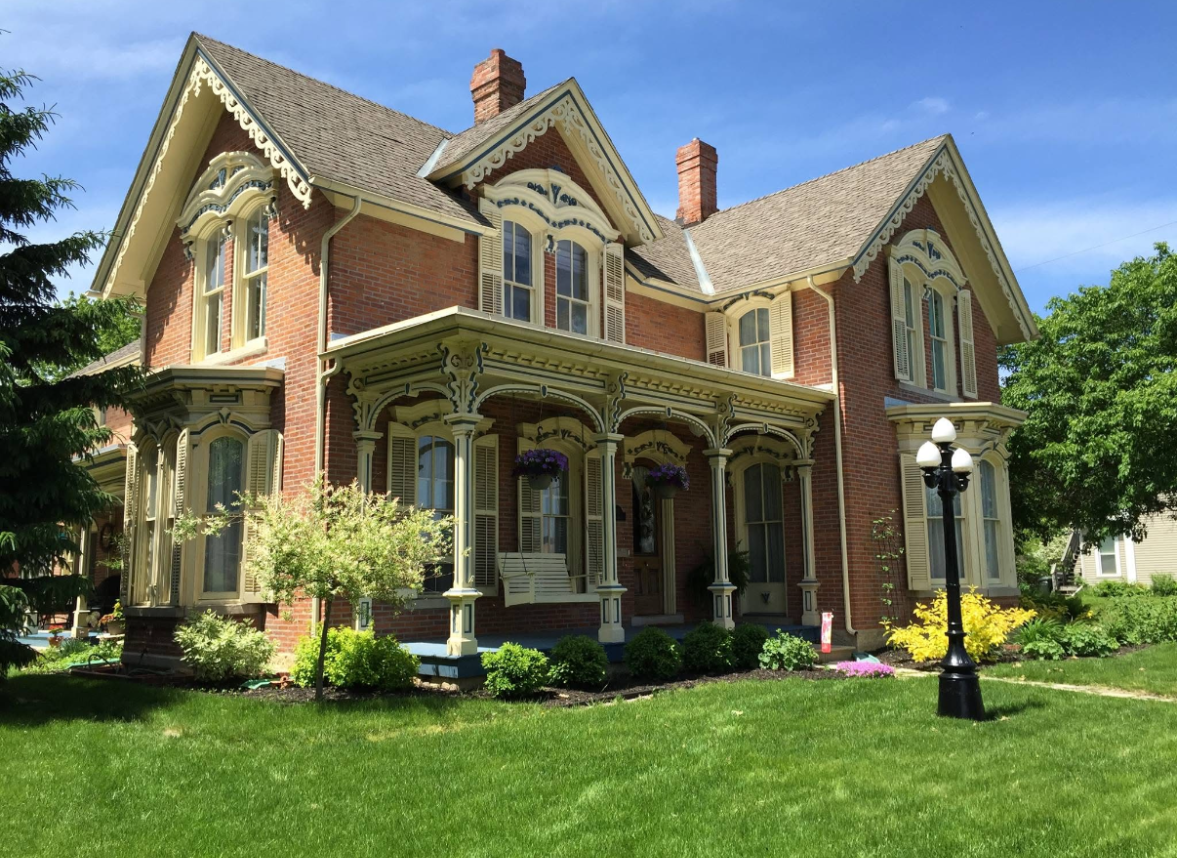
For me, living my formative years in one of the iconic homes in Cedar Falls shaped my universe and blended our family history with the life stories of one of the town’s founding families.
In a way, it made us a part of the intangible history of Cedar Falls, which continues today.
Writing this story allowed me to reflect on my own experiences as a kid there. It gave me a reason to chat with my parents, Sue and Todd, about their care and duty as homeowners of the prominent residence at 603 Clay Street, the once-opulent Sartori House.
When my family moved there in 2012, I was 8 years old and experiencing what felt at the time as the biggest change in my life.
My previous school, Price Laboratory School, had just closed, and I was preparing to start third grade at Lincoln Elementary. Everything felt uncertain, but as soon as we moved into the historic brick home just a block from my new school, it began to feel like a fresh start.

My parents had fallen in love with the house immediately.
“We decided to move into the Clay Street house because we’ve always loved old homes, and this one was historic in the community and so old,” my dad told me. “We had never lived in such an old home, built in 1865.”
My mom agreed.
“The previous owners kept the Victorian feel to it, and the location was great and close to downtown Cedar Falls,” she said. “It was really beautiful, and it had more unique things about it than the other old houses we’d lived in.”
The house was unlike anything I had ever seen. It came with the original Sartori family Bible and blueprints, reminders that generations of people had lived there before us. Every room seemed to have its own personality.

There was a stained-glass conservatory that filled with light, a large parlor and a narrow hallway that stepped down into a back room once used as a maids’ quarters. The house even had a programmable doorbell that could play different songs, like “Beethoven’s Fifth Symphony,” “Auld Lang Syne,” “The Entertainer,” and even various Christmas tunes. We changed the song with the season and holidays.

My favorite room, however, was my bedroom.
It was the first bedroom that truly felt like my own. My dad let me choose the color, and I picked a bright, deep blue. Looking back, it was my first “big girl” room, and I loved it.
Many of my favorite childhood memories took place inside those walls. My best friend, Brynn, was constantly at our house. We spent countless afternoons together, hosted sleepovers, celebrated birthdays and created the kinds of memories that seem ordinary happenings at the time but become priceless later.
Brynn passed away in 2024 at the age of 20, and our childhood friendship took on a whole new dimension. Although our bond naturally changed as we grew older and moved in different directions, 603 Clay Street remains one of the places where I remember her most clearly. The house holds some of the happiest memories of our childhood friendship.
The historic home was also a gathering place for the community. Behind the house stood a unique three-story garage. The top floor, known as the Carriage House, became a venue of sorts where my dad hosted jazz concerts. Musicians and community members would gather to play and listen to music. The basement served as a storage area, workshop and workout room.
History of the Sartori House
As much as I loved the house, its history sometimes frightened me.

The home was built in 1865 by Joseph Sartori, a German immigrant and skilled mason who completed the brickwork himself. According to the History of Black Hawk County, Joseph and his wife, Theresa, settled in Cedar Falls after immigrating from Germany and created a home for their family.
Theresa Sartori became an important figure in Cedar Falls. She served as the first president of a Ladies’ Aid Society at her church, helped care for the sick and homebound, participated in the Women’s Relief Corps and co-founded the Cedar Falls Woman’s Club. After she died in 1901, her husband and son established Sartori Memorial Hospital in her honor.

The house also witnessed tragedy. One of the Sartoris’ young sons passed away in the house, and Theresa took her last breath inside the home after battling cancer.
As a child, those stories fueled my imagination.
I often convinced myself that I heard strange noises or saw things out of the corner of my eye. Whether it was the house’s history or simply an active imagination, I spent many nights wondering if I was truly alone.
My mom remembers feeling uneasy about one part of the house as well.
“I remember the back staircase that led to what they would call the maids’ quarters and how different it was designed than the rest of the house,” she said. “It felt a little creepy to me, and there was just something off about it.”
Even the famous doorbell occasionally added to the mystery.
“We had that cool doorbell that could play different songs,” my dad recalled. “And for some reason, it would go off some nights between 12 and 2 a.m. We’re pretty sure it was some sort of electrical issue.”
The house’s historic appearance also created some unexpected situations. Because it resembled a local museum and sat near downtown Cedar Falls, visitors occasionally mistook it for a public attraction.

“Especially during Sturgis Falls weekend, we’d have people walking on the back porch and looking into the window, thinking it was the Victorian House Museum that was located down the road,” my mom said. “One day, someone walked through the front door while I was doing laundry and asked when we opened.”
Living in a historic home also came with responsibilities. My parents invested significant time and energy in preserving it.
“We did a lot of renovations that freshened it up while still preserving the old house look and feel,” my dad told me.

They removed wallpaper, repainted trim, updated bathrooms and completed countless maintenance projects. Despite their efforts, the realities of maintaining a large historic home eventually become difficult to balance with work and family life.

“We decided to move because I think we just got busier,” my mom said. “You kids got older and were in more activities, and we were trying to balance work, and it was a lot of house to upkeep.”
“We wanted to be able to spend more time going to your activities,” my dad added.
My family moved out in 2017, but the house remains an important part of my childhood. Later owners completed many of the major renovations that further restored the property while preserving its historic character.
When asked about historic preservation, my mom still believes homes like 603 Clay Street are worth saving.
“It really is a case-by-case basis, but I’d prefer for them to preserve historical houses if possible,” she said. “I think it’s awesome that you can have an old house like the Clay Street house, and because of the price range, you know that people are buying it for the age of the house and for the history, because they love houses like that.”
Today, when I think about 603 Clay Street, I think about more than its architecture or historical significance. I think about walking to Lincoln Elementary, choosing the color of my bedroom walls, listening to jazz concerts in the carriage house and spending time with my best friend.

The house has stood in Cedar Falls for more than 160 years. Long before my family lived there, it witnessed the lives of the Sartori family, and long after we had moved, it continued collecting stories from the people who called it home.
For five years, however, it was our home.
And for me, it will always be one of the places that shaped my childhood and appreciation for historic homes.