


by Brady Reeves
A love for the Cedar River and a passion for music brought kindred spirits together 40 years ago. What began as a shared effort to care for the river grew into the Cedar River Festival Group, a community rooted in environmental stewardship, community and song.
Through the memories of its founders and longtime volunteers, the group’s story reveals how a connection to the river inspired decades of action, brought people together through music and created a tradition that continues to celebrate both human talent and the natural world.
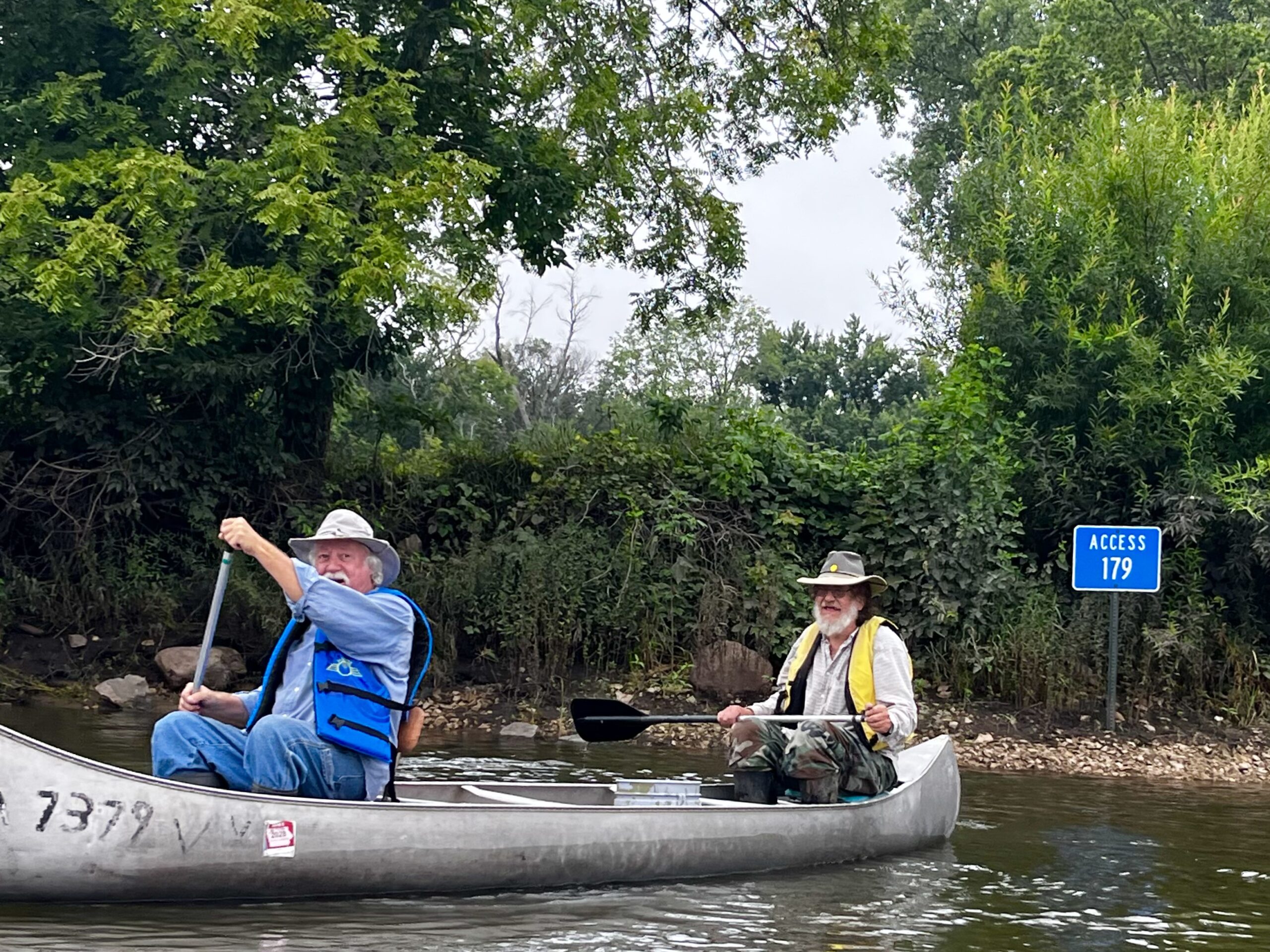
This year, volunteers carried the tradition forward in about a dozen canoes.
The group’s 40th anniversary cleanup began Saturday, July 25, at Island Park in Cedar Falls, where volunteers checked in, gathered supplies and boarded a bus to Washington Union Access, about seven miles north of the park.

There, volunteers paired off in canoes and began paddling back toward Island Park, searching the riverbanks and sandbars for tires, cans, bottles and other debris.

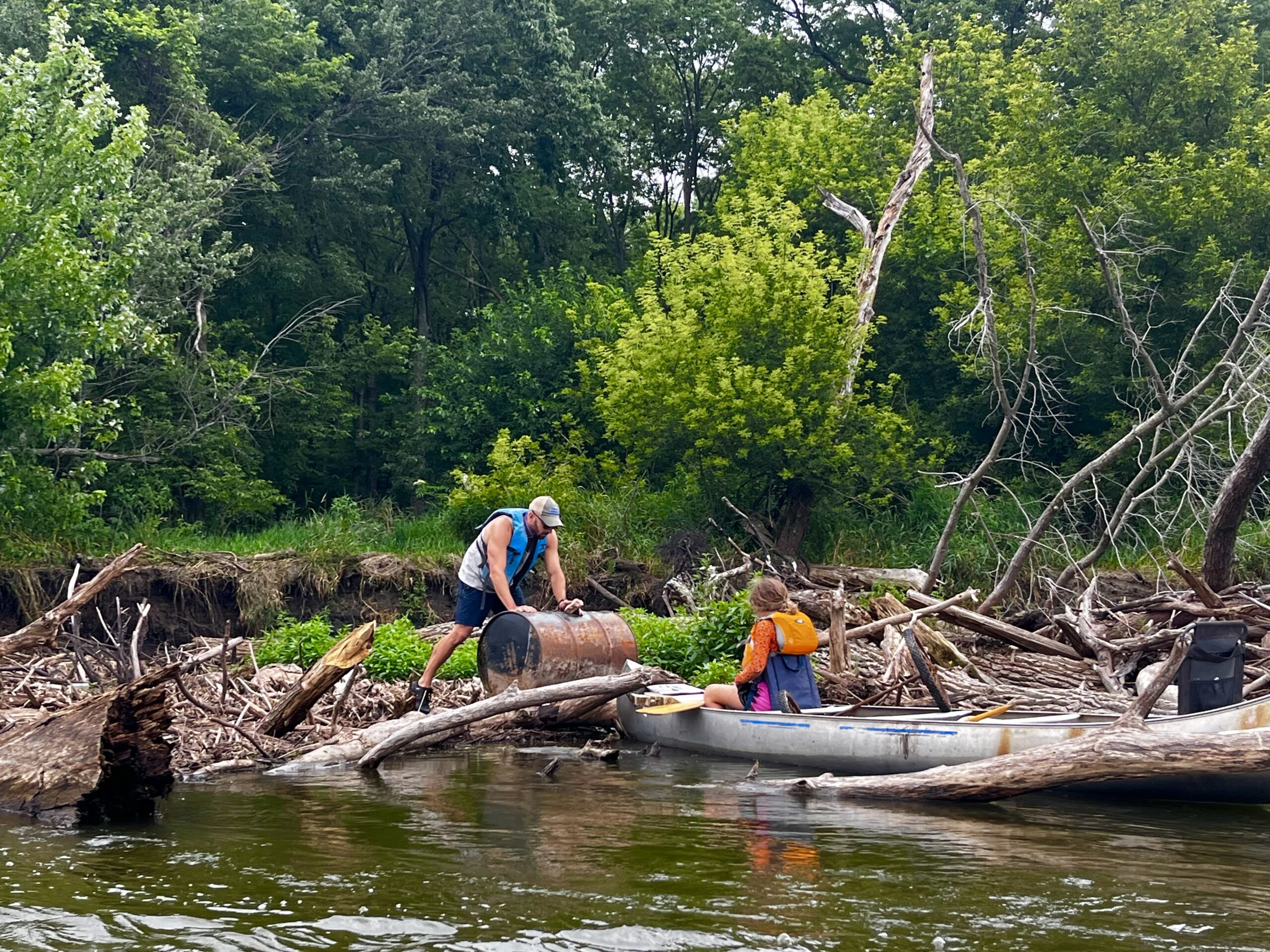
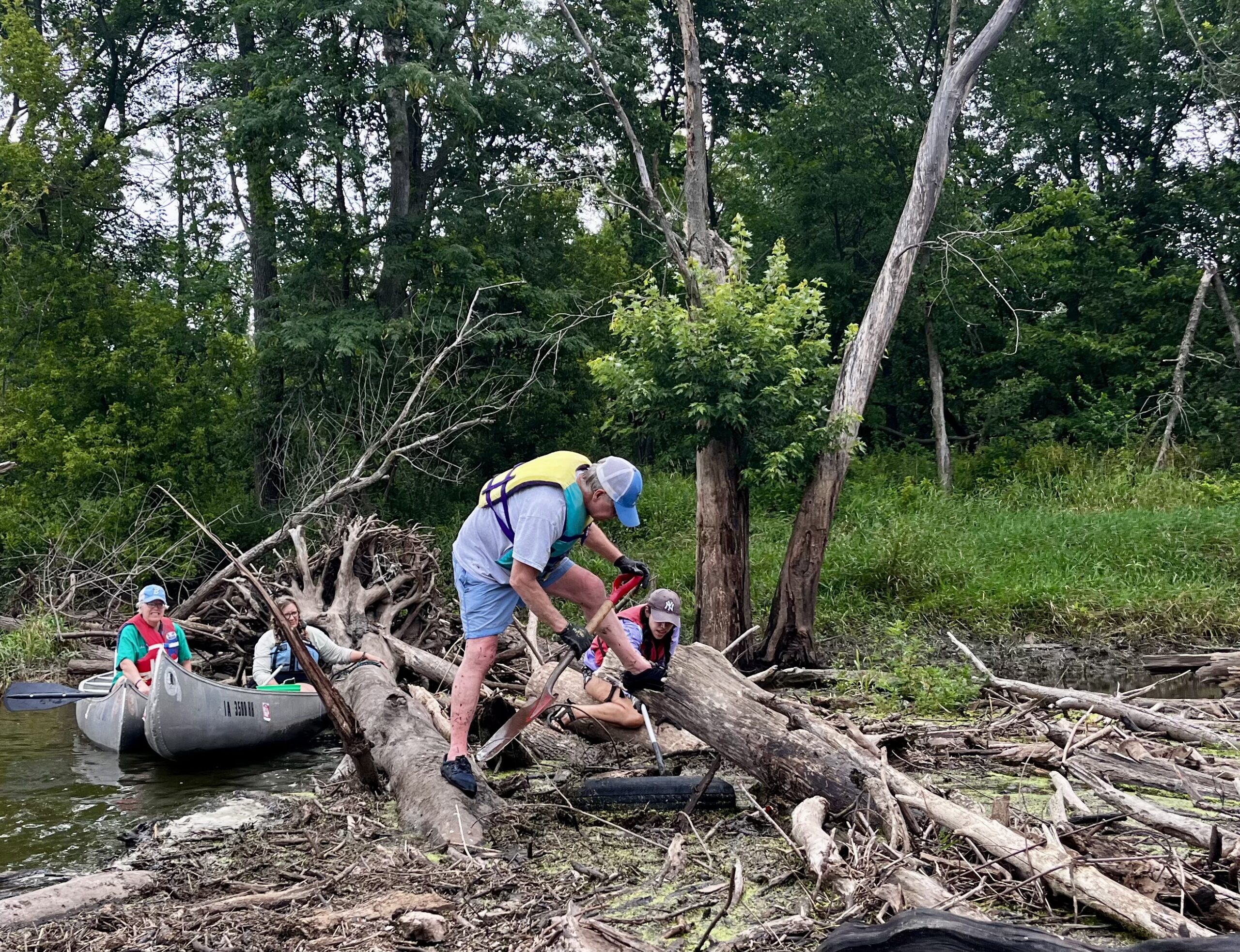
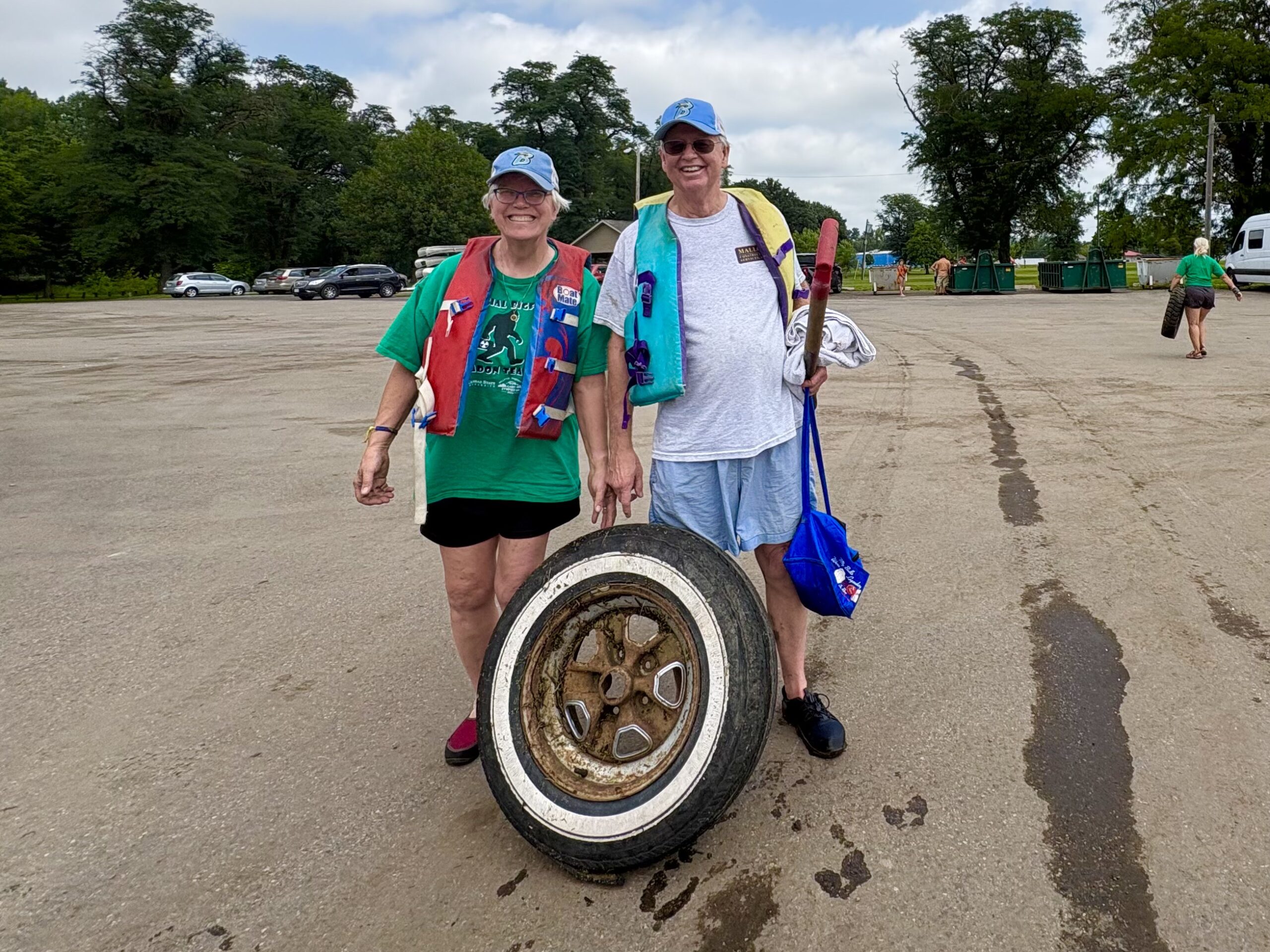
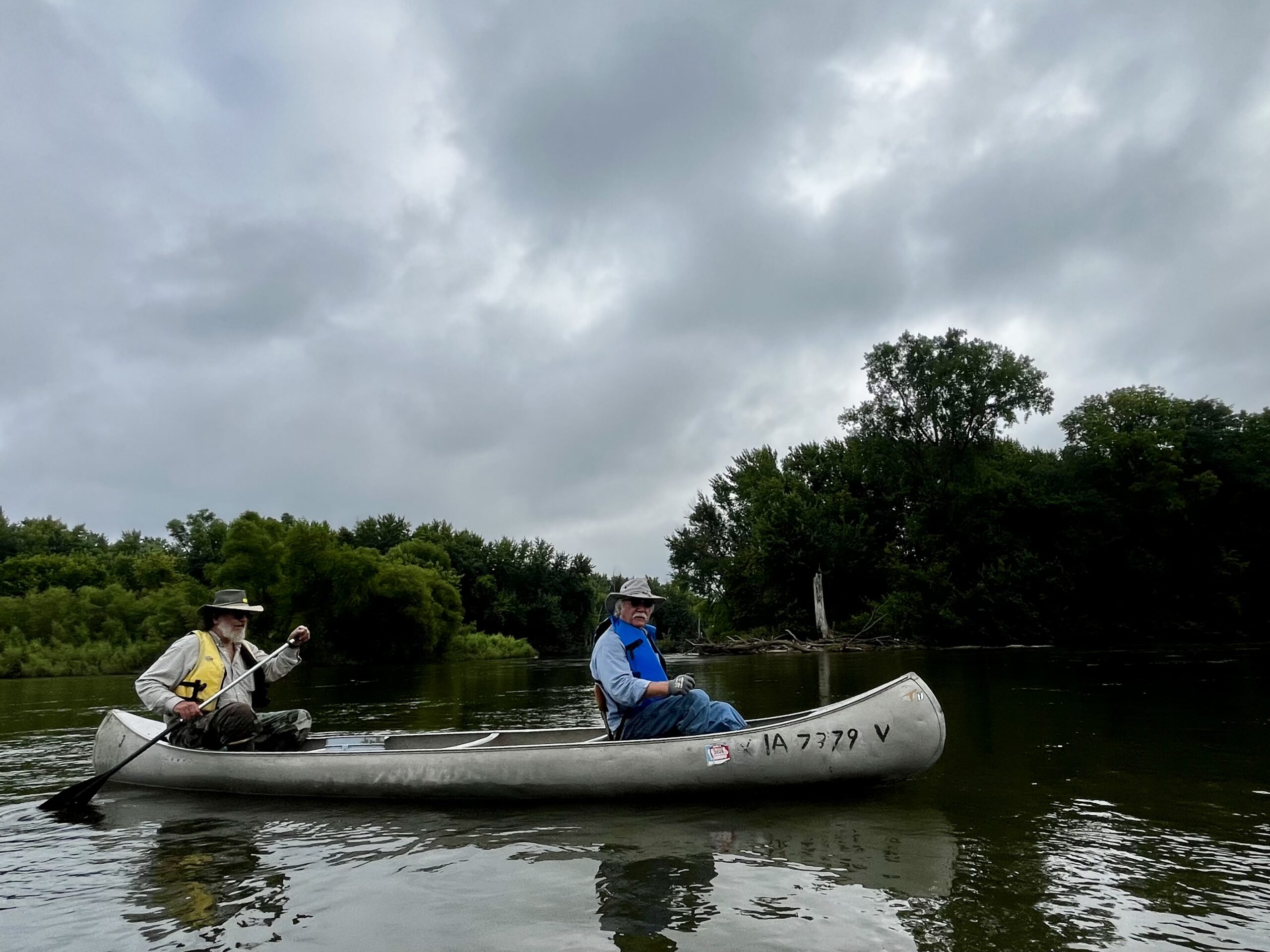
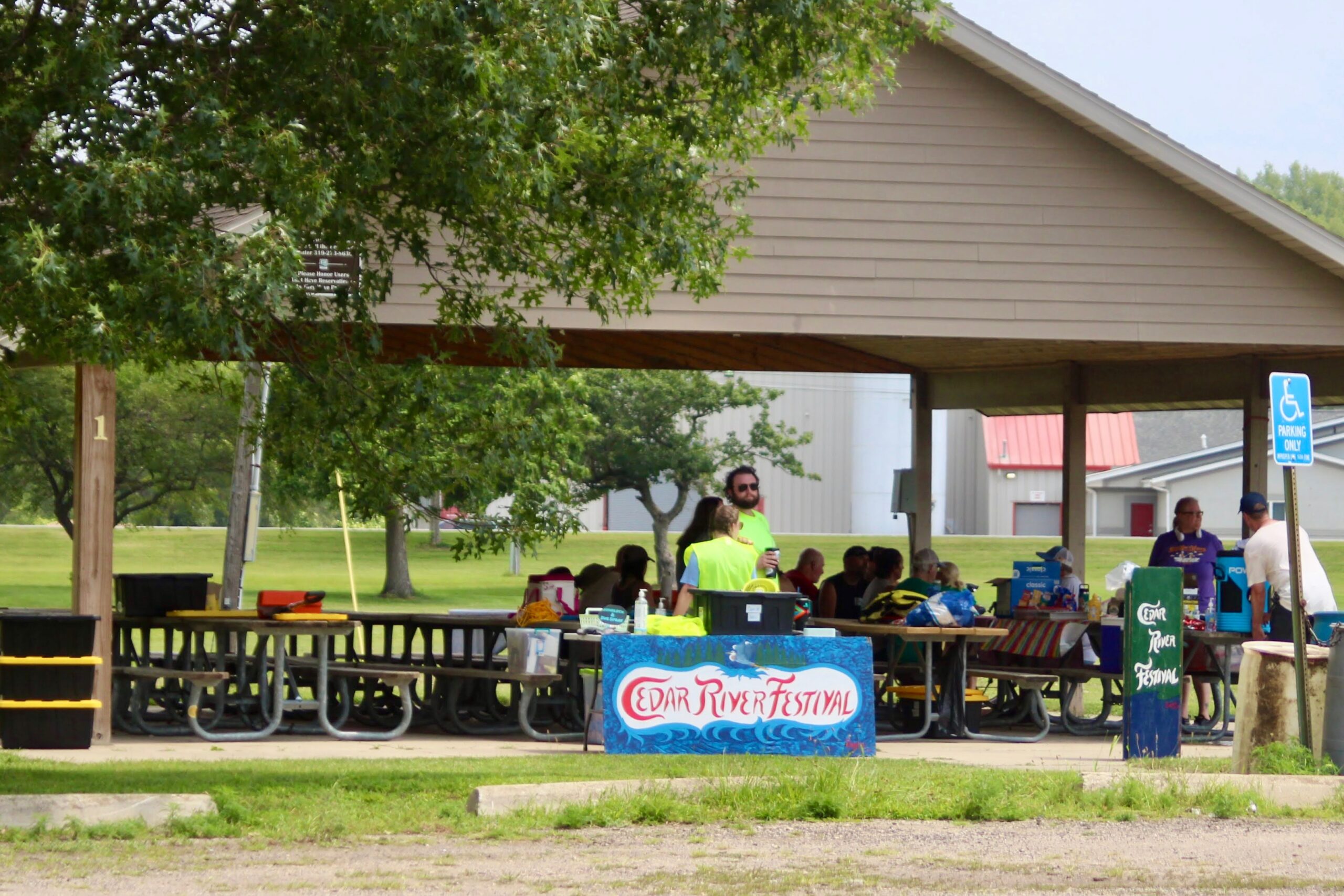


What volunteers have found along the river has changed considerably over four decades, reflecting both the cumulative impact of the cleanups and changing attitudes toward treating the river as a dumping ground.
On one sandbar during Saturday’s cleanup, feathers, shells, raccoon tracks and driftwood far outnumbered litter. With so little other trash nearby, a discarded bicycle inner tube stood out.

That was not always the case.
At the height of the river’s pollution, volunteers encountered tires, appliances and even submerged cars that sometimes had to be dismantled piece by piece.
Raldo Schneider, the Cedar River Festival Group’s last surviving founder, remembers years when volunteers hauled tons of debris from the river. During one cleanup below the Janesville bridge, volunteers collected about 235 tires, enough to fill an old dump truck.
“If we hadn’t been doing this over the years, these sandbars and the riverbanks would look like a dump,” Schneider said.
A Mississippi River idea comes to Cedar Falls
During the early 1980s, Schneider participated in the Mississippi River Revival, which combined river cleanups with music festivals in communities along the Mississippi River.
After moving to Cedar Falls in the mid-1980s, Schneider took a canoe trip down the Cedar River and recognized the need for a similar effort locally. He connected with Shelley Sheehy, Leila George and Larry Dunagan, who shared his interest in caring for the river. Together, they established the Cedar River cleanup and festival.
The first cleanup, held in 1986, began at Thunder Woman Park near Finchford Road in Janesville and continued downstream to Black Hawk Park. Schneider estimated that about nine canoes participated that year. By the third year, participation had grown to about 75 canoes.
Volunteer numbers have fluctuated with weather, flooding and river conditions, which have sometimes forced organizers to alter or cancel the float. Schneider said the organization nearly disappeared during the early 2000s before new volunteers helped revive it.
For Schneider, a retired farmer, raising awareness of the river’s remains the cleanup’s greatest accomplishment.
“Just getting people aware of the river,” he said.
He also hopes younger volunteers will carry the tradition forward.
“I’m the last man standing,” he said. “We need to get younger people involved.”
A lifetime connected to farming, rivers and music

Schneider grew up on a farm near Bennett, Iowa, and continued farming until he was 33. Those experiences later became a foundation for his songwriting, which frequently explores agriculture, rural life and environmental concerns.
The Mississippi River Revival showed him how cleanup events could also create opportunities for musicians by providing stages and sound systems, an idea that later shaped the Cedar River cleanup and festival.
Schneider began seriously learning guitar during a severe winter of 1979 while living with friends in a rural farmhouse outside Bennett they called the “Blue Igloo.”
Snow sometimes left the residents stranded, and the poorly insulated house required two wood-burning stoves and about 40 pickup loads of firewood.
Sitting beside a potbellied stove with a guitar from his brother, Schneider taught himself to play by working through Paul Simon and Bob Dylan songbooks and soon began writing songs of his own.
His first formal performance came at the General Store in Stone City, a former gathering place associated with Grant Wood’s art colony. Schneider auditioned with an original song called ‘Homebrew.’ Although his guitar playing was described as intermediate, his songwriting earned him a performance.
Rather than building his repertoire around cover songs, Schneider wrote original music about what he knew best: farming, rural life, the growing use of agricultural chemicals and events from his own life.
Of the songs Schneider has written, he said “2,4-D” and “Springtime in the Country” are among those that “get a lot of attention.” Both grew from what he witnessed during his years as a farmer. As agricultural chemicals increasingly replaced practices such as crop rotation, Schneider became concerned about their long-term effects on Iowa’s soil and water, as well as the health of those who handled them and others who were exposed.
Four decades later, those concerns remain closely connected to the purpose of the Cedar River cleanup.
From bass lines to riverbanks
Among the longtime participants returning for the anniversary cleanup was Travis Smiley, bassist for Raldo and the Boys.
Smiley has participated in the cleanup since its first year and remembers when tires, vehicle parts and other large debris were common along the river.
“I bet we got 1,000 tires out of here,” he said.

During this year’s float, Smiley and his canoe partner encountered a tire that proved difficult to dislodge, but he remained determined.
“I’m going to get that tire if it’s the last thing I do,” he said.

Smiley attended the University of Northern Iowa during the Vietnam War and later entered residential construction after helping build the UNI-Dome. Now retired from house carpentry, he works on boats.
Smiley’s musical career also spans decades. He played tenor saxophone with Iowa Blues Hall of Fame inductee Rush Cleveland before joining Raldo and the Boys.
When Schneider first moved to the area, Smiley remembered thinking, “Geez, that Raldo is a musical genius, but he doesn’t need a saxophone player.”
He eventually found his place in the band, playing a Gibson EB-2 bass. Smiley joked that Schneider’s songs were “idiosyncratic enough that no one else wanted to learn them,” but their distinctive style helped form a partnership sustained through decades of music, friendship and river cleanups.
For Smiley, finding little trash does not diminish the cleanup’s value. Instead, he sees it as evidence of the event’s success.
“It gets people out on the river,” he said. “Even if they don’t pick up one can, they at least say, ‘Oh, we’ve got to take care of this river,’ because it’s so nice out here.”
From the river to the stage

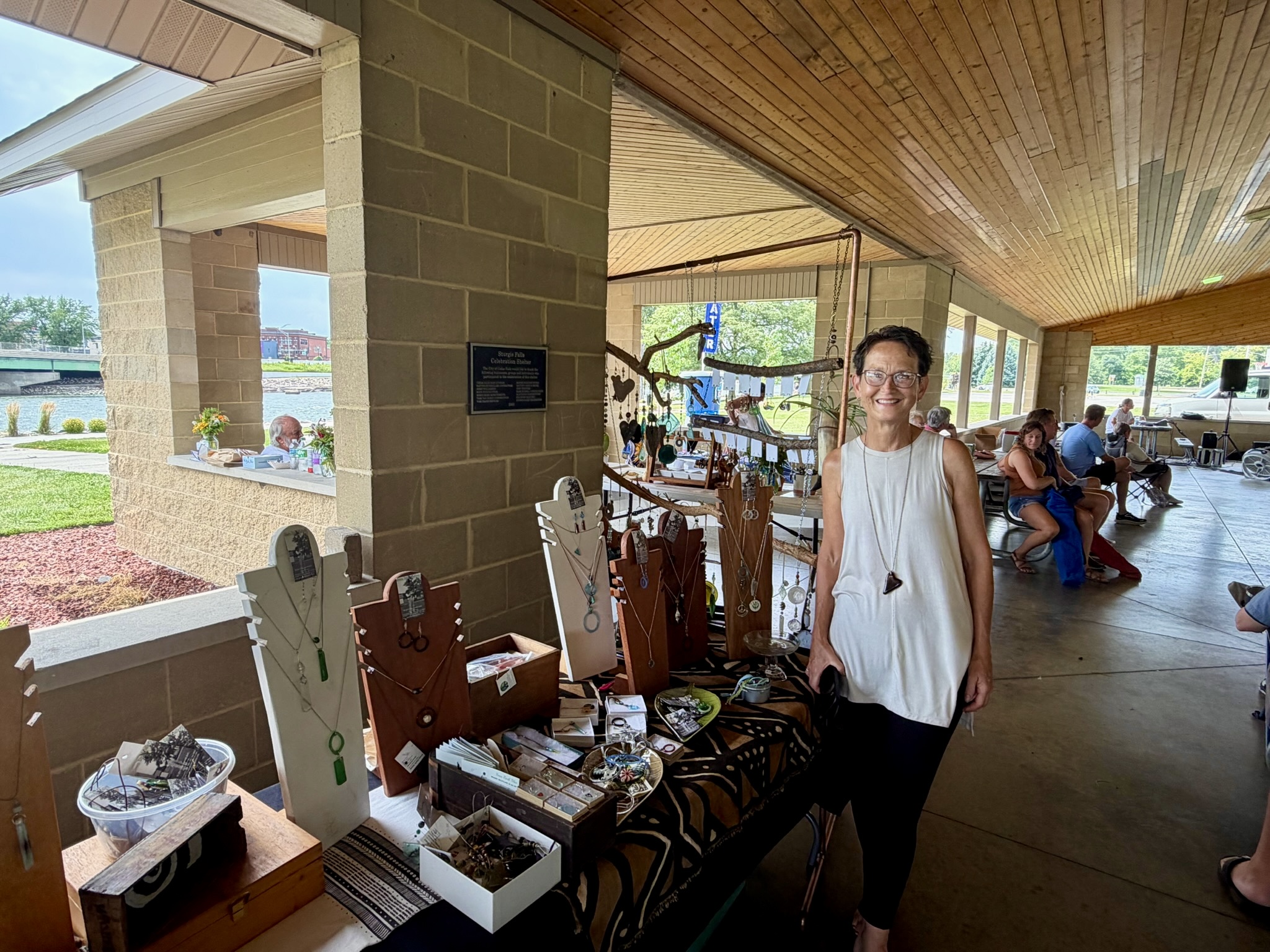
Following Saturday’s cleanup, the two-day anniversary celebration continued Sunday, July 26, at the Gateway Park shelter with live music, local vendors and the release of a commemorative vinyl record.
Running from noon to 6 p.m., the festival featured performances by Uncle Chuck, the Black Sheep Family String Band, Karla Ruth, Raldo and the Boys, Walking Dead Zeppelin and the Rush Cleveland Trio.
Raldo and the Boys’ appearance brought Schneider and Smiley from Saturday’s canoes to Sunday’s stage, continuing the combination of environmental work and live music that inspired the original event.
Local food, artists and vendors also filled the park. Among them were La Calle; Ali Meyer of Rise & Root; Janna Bowman of Green Earth Glass; and Andy Mills of Uncle Stinky’s, who displayed sculptures and demonstrated live blacksmithing.



Cedar Falls music preserved on vinyl

The commemorative vinyl record features eight songs performed by four acts connected to the festival.
The project grew from the Cedar River Festival Group’s 40th anniversary and its four-decade tradition of pairing river cleanups with live music. Performances by four acts were recorded during the group’s fall fundraiser at the Octopus on College Hill on Nov. 23, 2025, and later prepared for release on vinyl.
Cedar River Festival Group board member Ralph Bryant served as recording engineer for the project. During Saturday’s cleanup, Bryant also worked with the land crew to clean Island Park and meet canoeists as they returned.
John Walts provided sound engineering, while John Chamberland of My Humble Abode Studios mixed and mastered the recordings for vinyl. Bryant described Chamberland as the “wizard behind the curtain” who prepared the project for pressing and helped bring the album together.
Bryant had previously recorded Uncle Chuck, Raldo and the Boys and the Rush Cleveland Trio and developed relationships with many local musicians over the years.
The album features Karla Ruth’s “Road to Love” and “Where I Need to Be”; Uncle Chuck’s “Cedar River Festival Survivors Song” and “Sail Cat”; Raldo Schneider and the Boys’ “Springtime in the Country” and “Cedar River Son”; and the Rush Cleveland Trio’s “Leaving Chicago” and “Baby You’re Cold.”
Bryant said many of the musicians featured on the album have supported the festival for decades. The record offered a way to recognize their contributions while preserving a distinctly local sound.
“When I think about this music, it’s Cedar Falls music,” Bryant said.
“I’m honored that people allow me to capture their sounds,” he said. “I’m honored that I was able to help the River Festival Group capture this moment in time.”
Bryant described the organization as a grassroots effort sustained by volunteers and community donations. He said its work to protect clean water remains important and hopes others will become involved.
“They’ve very successfully married cleaning the river and music,” Bryant said. “Those are two things that are pretty near and dear to me.”